




Cimatechange

  • Bogazici University
    Center for Climate Change
    and Policy Studies
  • Bogazici University
    Center for Climate Change
    and Policy Studies
  • Bogazici University
    Center for Climate Change
    and Policy Studies

We are producing high-definition regional climate model outputs to assess how the climate will change in Central Asia, MENA, Australasia, Mediterranean, Turkey and sub-regions such as Cyprus.

about us...

We conduct interdisciplinary research on the impacts of climate change and policies and support the literature for the implementation of these surveys in neighboring regions such as the Eastern Mediterranean, the Middle East and Central Asia, and the geography we live in.

about us...

We conduct studies to provide education to undergraduate and graduate students, to provide informative trainings to relevant units in the public and private sectors, and to establish a sustainable information platform on climate change.

about us...

We are working to create an up-to-date database on climate change and policies, to use the database in interdisciplinary research, to share information with relevant institutions and individuals in conferences and seminars, and to convert the information into publications.

about us...

We provide insight into the impacts of climate change on the Eastern Mediterranean, Middle East and Central Asia and support policy-makers in areas such as renewable energy, emission reduction, adaptation to agriculture and impact studies of extreme climatic events.

about us...

Region 8: Central Asia leader

Region 9: Australasia contributor

Region 13: Middle East & North Africa contributor

4
SERVERS
160
CPUS
37
ARTICLES
37
CUPS OF COFFEE
2943
PIECES OF PUZZLE

PLANETARY BOUNDARIES

Meeting the increasing energy demand with the increase in population by using coal, natural gas and oil increases the carbon emission and causes the climate to change rapidly.
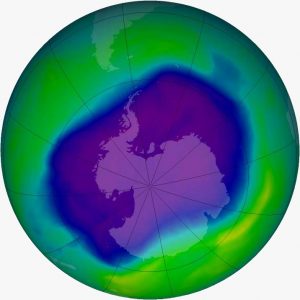
The thinning of the ozone layer caused by harmful gases in the air causes the harmful rays from the sun to pass through the ozone layer more easily.

Species that cannot adapt to environmental changes rapidly becomes extinct.

*Latest CO2 reading : 424.20 ppm

Scripps CO2 measurements at Mauna Loa are currently supported by Schmidt Sciences with supplemental support from Earth Networks, a technology company collaborating with Scripps to expand the global GHG monitoring network. Support for website development was provided in part by the National Science Foundation (NSF).  The Mauna Loa Observatory is run by the National Oceanographic and Atmospheric Administration.

More
English